The Scheduling Conundrum: A Suggested Tweak That Could Tweak Major League Baseball Now
The baseball landscape is changing. Not just with rule changes, implementation of pitch clocks, and anticipated financial and competitive repercussions leading up to the 2027 season. The game is growing, and by “growth,” Major League Baseball is talking about adding new teams to their competitive circuit.
During the 2025 Little League Classic in Williamsport, Pennsylvania, MLB Commissioner Rob Manfred, on live television, hinted towards expansion and “the opportunity to geographically align.” For those unfamiliar, this means that the American League and National League as we know it could be replaced with a more “eastern conference” and “western conference” approach. The interleague rivalries fans know and love, like “Yankees vs. Mets,” “Cubs vs. White Sox,” and “Dodgers vs. Angels,” will now be more frequented as divisional matchups. With this as well, the yearly cross-country meetings between the Yankees and Mariners, for example, will be reduced or potentially nonexistent, contingent on how MLB approaches geographical realignment, if any.
Regardless, it will be a few years before we see any expansion team take the field. Not only does the league need to announce the awarded cities, but said cities still need to build new stadiums to accommodate. As seen in the case of the Las Vegas Athletics of Sacramento, California, no one in the baseball realm is too keen on having major league teams play in minor league stadiums.
The big question on the minds of all baseball fans is which cities will be getting expansion teams. Cities like Nashville (TN), Charlotte (NC), Salt Lake City (UT), and Portland (OR) are all being considered. This will ultimately decide the extent of the divisional realignment to be expected.
Regarding regionality, fans are split. To more traditional fans, focus should be on preserving the American League and National League as is, with each league getting an expansion team. To the more modern fan, emphasis should be made on proximity, regardless of league, in an effort to alleviate travel concerns and increase rivalries on a more localized level.
While fans await expansion news, they can tackle both of these now in time for the 2027 season (or 2028 season, depending on whether MLB goes on strike) through a “simple” scheduling modification. MLB, if they wanted to, could start the process now to do an “east vs. west” configuration, but risk backlash from the traditionalists.
**Quick disclosure. Yes, “simple” is in quotation marks. This is because the term is subjective. What’s simple to some is not simple to others. Back to the blog.**
In 2023, MLB implemented “everybody play everybody.” All 30 teams will play each other in the regular season. For the 2026 season, each team will play:
- 13 games against each of the 4 other teams in their division.
- 6 games against 8 teams within their same league.
- 7 games against 2 teams within their same league.
- 6 games against one interleague rival.
- 3 games against the other 14 interlague teams.
These numbers, compared to other leagues, are not uniformed. In the National Hockey Leagu, for example, each team next season will play their division four times each, rest of conference three times, and inter-conference twice, totaling 84 games. A set designated number for all hockey clubs. Separate, with teams going across the country often to play in-league matches, players often complain about travel and jet lag impacting their performance.
The league can easily make the schedules more uniformed in design and account for player travel concerns by implementing the following:
- 12 games against divisional opponents.
- 6 games against teams within their same league.
- 3 games against 12 Interleague opponents.
- 6 games against 3 dedicated Interleague opponents.
- Mondays to be designated “off days” for all teams.
This approach offers a number of benefits:
- Teams still play 162 games per year.
- Each series is a 3-game set.
- Mondays are dedicated rest days to allow for extensive travel and to ensure a better quality product. This date can also be used as dedicated time slots to easily reschedule games rained out and eliminate the need for double headers.
This approach does has some negative consequences:
- Baseball games will not be played and watched on an every-day basis.
- The fun of having a double header is virtually eliminated.
- Due to dedicated off day during the week, the season could take longer to complete, which could result in either later postseason start date or need to start regular season earlier in March, therefore impacting spring training.
- The league loses a form of marketability for games played on summer holidays, like Memorial Day and Labor Day, or even the 4th of July if it falls on a Monday during the regular season.
- Some teams may not benefit from the additional dedicated interleague matchups, as protecting some will lead to assignments that may not make any sense for regular season play.
Regarding Interleague, each MLB team will be assigned a set three dedicated Interleague opponents to play every year based on one or more of the following conditions:
- To preserve existing Interleague rivalries.
- To reignite older traditional rivalries based on historical factors.
- To limit travel by playing interleague teams closer to home cities.
- To market more marquee matchups that are limited by current Interleague scheduling matrices.
Should this approach be approved by MLB, below are the assigned Interleague rivalries that should be considered:
- American League East
-
- BAL: Mets, Phillies, Nationals.
- BOS: Mets, Phillies, Braves.
- NYY: Mets, Braves, Dodgers.
- TBR: Marlins, Braves, Nationals.
- TOR: Phillies, Nationals, Pirates.
- American League Central
-
- CWS: Pirates, Brewers, Cubs.
- CLE: Pirates, Reds, Marlins.
- DET: Pirates, Reds, Marlins.
- KCR: Brewers, Cubs, Cardinals.
- MIN: Brewers, Cubs, Cardinals.
- American League West
-
- HOU: Cardinals, Diamondbacks, Rockies.
- LAA: Dodgers, Giants, Padres.
- LVA: Dodgers, Giants, Padres.
- SEA: Rockies, Diamondbacks, Padres.
- TEX: Diamondbacks, Rockies, Giants.
- National League East
-
- ATL: Yankees, Red Sox, Rays.
- MIA: Rays, Guardians, Tigers.
- NYM: Yankees, Red Sox, Orioles.
- PHI: Red Sox, Orioles, Blue Jays.
- WSH: Orioles, Rays, Blue Jays.
- National League Central
-
- CHC: White Sox, Royals, Twins.
- CIN: Blue Jays, Guardians, Tigers.
- MIL: White Sox, Royals, Twins.
- PIT: Guardians, Tigers, White Sox.
- STL: Royals, Twins, Astros.
- National League West
-
- ARZ: Astros, Rangers, Mariners.
- COL: Astros, Rangers, Mariners.
- LAD: Yankees, Angels, Athletics.
- SDP: Angels, Mariners, Athletics.
- SFG: Angels, Rangers, Athletics.
This is just one of many suggestions across the Internet on how MLB can make scheduling better. Only time will tell how the league will handle.
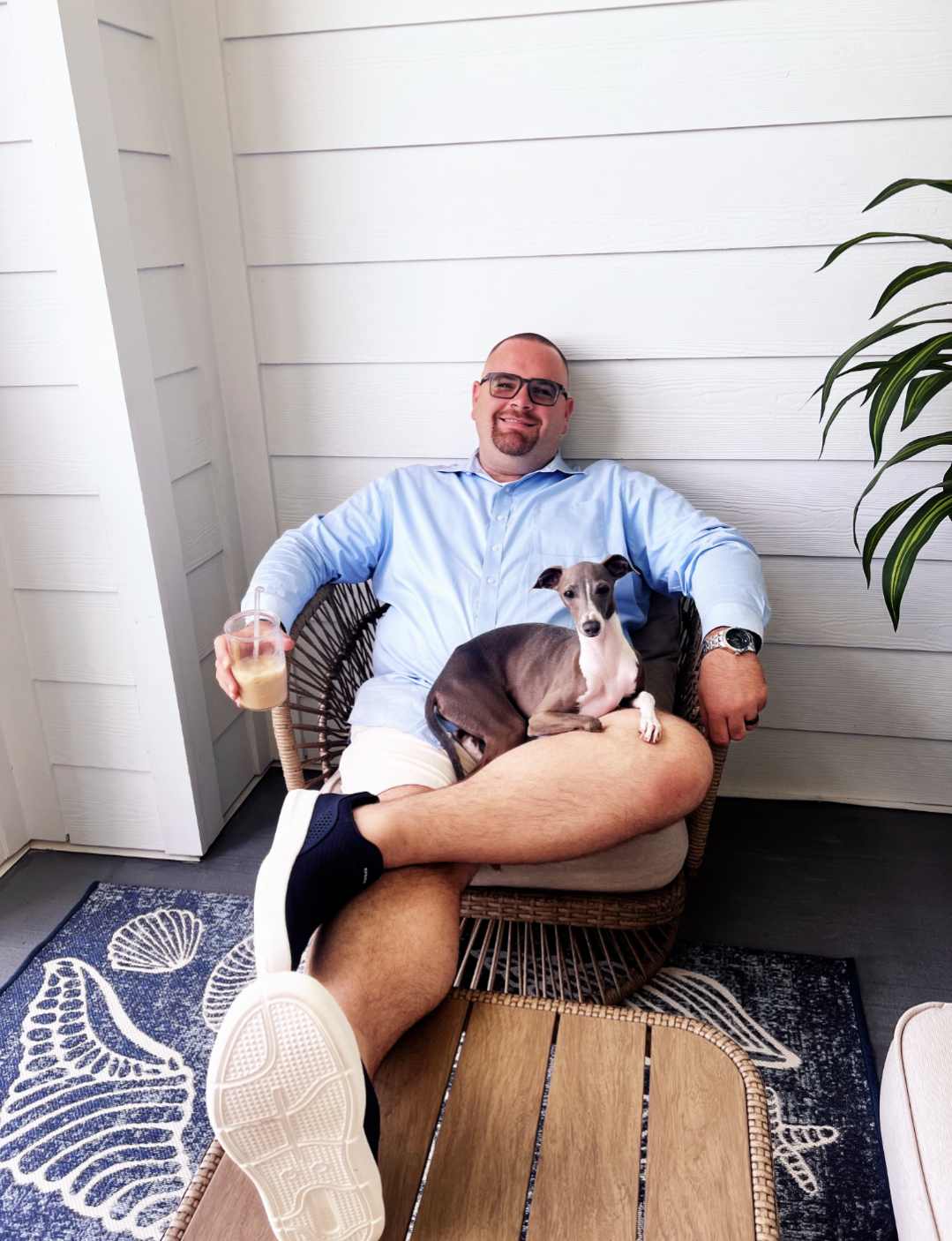
Contributor
Man Darley has been in and out of the spotlight dating back to the infancy stages of NTS when they were FUNTS. Just because his career took him in a completely different direction doesn’t mean that he still aspires to be a sports personality. The good kind at least.
Here are three fun sports facts about Man Darley:
1. His favorite mascot of all time is Sandy the Seagull (Brooklyn Cyclones).
2. In a recreational basketball game, he shot on the wrong net, wide open and no one guarding him, and missed (He was in middle school).
3. In one game as a roller hockey goalie, he allowed seven goals on six shots. You read that right, it’s not a typo (He was in high school).
You can see him in the summer rooting for the New York Yankees, Saturdays in the fall watching his beloved Notre Dame Fighting Irish, and in the winter going all out for the New York Rangers.
Rangers Glass Half Full | The Cutting Edge W/JackKnife